
Imagine you’re building a sandcastle on the beach, each grain carefully selected for its purpose; this is much like choosing the right surface materials for high-use recreational areas. You must weigh durability, safety, and aesthetics against environmental impacts and maintenance needs. Whether you opt for synthetic turf’s low upkeep, rubberized surfaces’ safety benefits, or the sturdy practicality of concrete, each choice carries its own set of advantages and challenges. So, how do you decide what surface best suits your space’s unique demands? It’s time to explore the options that cater to your community’s needs.
Natural Grass
When considering surface materials for recreational areas, natural grass stands out due to its aesthetic appeal and environmental benefits. You’ll find that natural grass offers a visually pleasing and soft surface, enhancing the overall ambiance of any recreational site. Its capability to absorb carbon dioxide and produce oxygen contributes positively to the environment, making it a sustainable choice. However, natural grass does come with its environmental impact and maintenance challenges. Regular watering, mowing, and fertilization are necessary to keep it in optimal condition, which can strain local water resources and introduce chemicals into the ecosystem.
From a cost comparison perspective, initial installation of natural grass might seem economical, but ongoing maintenance costs can add up over time. These include expenses related to irrigation systems, lawn care equipment, and labor. Despite these costs, many prefer natural grass for its excellent playability factors. It provides a cushioned surface that reduces the risk of injury during sports and recreational activities, offering a level of comfort that’s hard to replicate with other materials. By understanding these dynamics, you can make informed decisions about choosing natural grass for your recreational area, balancing aesthetic goals with practical considerations.
Synthetic Turf
As you explore options for recreational area surfaces, synthetic turf emerges as a compelling alternative due to its durability and low maintenance requirements. Unlike natural grass, synthetic turf withstands heavy foot traffic without showing wear and tear, ensuring longevity. It’s perfect for high-use areas, where maintaining natural grass can become a significant challenge.
The installation process involves laying a stable base, which includes proper drainage systems to prevent water accumulation. Once installed, synthetic turf requires minimal maintenance—no need for mowing, watering, or fertilizing. This not only reduces your long-term costs but also lowers the environmental impact associated with the upkeep of natural grass.
From an aesthetic perspective, synthetic turf provides a consistently lush, green appearance year-round, enhancing the visual appeal of your recreational space. It’s manufactured to mimic the texture and color variations of natural grass, making it an attractive choice. Additionally, modern synthetic turfs are designed with environmental consideration, incorporating materials that are recyclable and non-toxic. By choosing synthetic turf, you’re opting for a surface that balances technical performance with aesthetic value, all while being mindful of environmental sustainability and resource conservation.
Rubberized Surfaces
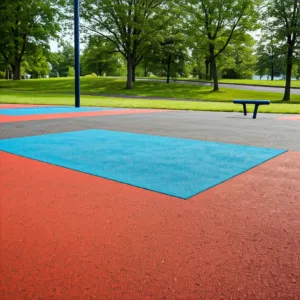
When considering rubberized surfaces for recreational areas, you’ll appreciate their superior safety and impact absorption properties, which help minimize injuries. These surfaces not only offer remarkable durability but also require minimal maintenance, ensuring long-term functionality and aesthetic appeal. Additionally, choosing rubberized surfaces supports environmental sustainability by utilizing recycled materials and reducing waste.
Safety and Impact Absorption
To ensure both safety and enhanced play experiences, rubberized surfaces provide superior impact absorption, crucial for recreational areas. When choosing a surface, you must consider impact testing and adhere to safety standards. Rubberized options excel in these tests, ensuring that they meet or exceed the requisite safety benchmarks. This ensures that children and adults alike can enjoy recreational spaces with reduced risk of injury from falls.
Aesthetically, rubberized surfaces offer a wide range of colors and designs, allowing you to create visually appealing spaces that complement their surroundings. Their versatility makes them an attractive choice for urban parks, playgrounds, and sports fields. Additionally, these surfaces require minimal surface maintenance, which contributes to their longevity. With proper care, they maintain their vibrant appearance and structural integrity over time, ensuring a lasting investment in safety and aesthetics.
From an environmental standpoint, many rubberized surfaces are made from recycled materials, reducing waste and promoting sustainability. By selecting these eco-friendly options, you’re supporting environmentally responsible practices while prioritizing safety and performance. This combination of technical benefits, visual appeal, and environmental consideration makes rubberized surfaces an ideal choice for high-use recreational areas.
Durability and Maintenance Needs
Rubberized surfaces are renowned for their durability, making them a popular choice for high-traffic recreational areas. When you’re selecting a surface material, consider their long-term durability and minimal upkeep. These surfaces withstand heavy foot traffic and adverse weather conditions, maintaining their integrity over time. Their resilience not only provides a cost-effective solution but also reduces the frequency of replacements, aligning with environmental sustainability goals by minimizing waste.
From a maintenance perspective, rubberized surfaces require regular attention to keep them in optimal condition. Although they demand minimal upkeep compared to other materials, you should still schedule regular maintenance checks. By doing so, you can identify potential repairs early, ensuring the surface remains safe and aesthetically pleasing. This proactive approach can extend the lifespan of the material, preventing minor issues from escalating into costly repairs.
Gravel and Stone
When you consider gravel and stone for recreational areas, focus on their impressive durability and relatively low maintenance needs, which make them a sustainable choice. You’ll find the cost and installation process straightforward, though it requires careful planning to ensure stability and proper drainage. Aesthetically, these materials blend naturally into the environment, enhancing visual appeal while minimizing ecological disruption.
Durability and Maintenance Needs
Considering gravel and stone for recreational area surfaces offers a blend of durability and low maintenance that appeals to many. When you choose these materials, you’re opting for longevity and resilience. Gravel and stone can withstand heavy foot traffic without significant wear, making them ideal for high-use areas. These materials naturally resist erosion and compaction, ensuring that your surface remains stable over time. Their inherent strength means they handle the elements well, reducing the need for frequent replacements.
Maintaining gravel and stone surfaces is straightforward, focusing on simple cleaning methods that preserve their aesthetic appeal. Regular raking keeps gravel evenly distributed and prevents areas from becoming uneven or compacted. For stone, a periodic wash with water is usually sufficient to maintain its appearance. Because these materials are permeable, they also allow for natural water drainage, reducing the risk of pooling and minimizing environmental impact.
Cost and Installation Process
Choosing gravel and stone for recreational area surfaces not only brings durability and low maintenance to the forefront but also offers a cost-effective solution. When evaluating budget considerations, gravel and stone fit comfortably within tight financial plans. Their initial costs are generally lower than other materials, making them an attractive option for those conscious of budgetary constraints. However, it’s crucial to account for additional expenses like surface preparation and installation labor.
The installation process begins with careful surface preparation, which involves clearing and leveling the area to ensure proper drainage and stability. This step is vital for preventing future issues, so don’t overlook its importance. A well-prepared surface contributes to the long-term resilience of your recreational area.
Selecting the right contractor is another key aspect. Choose professionals with experience in gravel and stone installations, as their expertise can significantly impact the project’s adherence to timeline constraints. An efficient contractor will help streamline the process, minimizing delays and ensuring your project stays on track. By carefully considering these elements, you’re setting the stage for a successful installation that balances durability with aesthetic appeal, all while respecting environmental considerations.
Aesthetic and Environmental Impact
Gravel and stone often elevate the aesthetic appeal of recreational areas with their natural and versatile appearance. When you integrate these materials into a landscape, they seamlessly blend with the environment, offering a rustic charm that’s hard to replicate with synthetic options. Their earthy tones and textures provide a visually pleasing contrast to greenery, enhancing the overall visual experience. Technically, gravel and stone allow for creative design possibilities, from pathways to decorative borders, making them a dynamic choice for high-use areas.
From an environmental perspective, gravel and stone have a significant sustainability impact. They’re derived from natural sources, often requiring less processing than manufactured materials. By using locally sourced stone, you reduce transportation emissions and support regional economies. Moreover, their permeability aids in managing stormwater runoff, reducing the risk of erosion and promoting groundwater recharge. When you choose gravel and stone, you’re not just opting for aesthetic appeal but also contributing positively to the ecosystem. Their durability means less frequent replacement, minimizing waste and resource consumption over time. Consequently, gravel and stone present a balanced choice, marrying visual elegance with environmental responsibility.
Concrete and Asphalt
Concrete and asphalt are among the most popular choices for surface materials in recreational areas due to their durability and versatility. When you’re selecting materials, these options offer a solid foundation that withstands heavy foot traffic and harsh weather conditions. However, it’s essential to consider the potential for slippery surfaces, especially when wet. You can mitigate this by incorporating textured finishes or using additives that enhance grip.
From an aesthetic perspective, concrete and asphalt provide a sleek, modern look that can be customized through color treatments and patterns. This allows you to design spaces that are both functional and visually appealing. Despite their benefits, these materials have an environmental impact that shouldn’t be overlooked. The production of concrete and asphalt contributes to carbon emissions, and their non-porous nature can lead to increased water runoff, affecting local ecosystems.
To address these concerns, you might explore environmentally friendly alternatives such as permeable concrete or recycled asphalt, which reduce runoff and reuse existing materials. By carefully considering the balance between functionality, aesthetics, and environmental responsibility, you can create recreational areas that are both sustainable and enjoyable for all users.
Wood Chips and Mulch
While concrete and asphalt offer strength and modern aesthetics, wood chips and mulch present a more natural alternative for recreational areas. These materials not only enhance the visual appeal of playgrounds and parks but also prioritize playground safety. By providing a softer surface, wood chips effectively cushion falls, reducing the risk of injury. This is particularly important in areas frequented by children, where safety is paramount.
From an environmental standpoint, wood chips and mulch offer significant benefits. They are biodegradable and can improve soil health as they decompose, enriching the surrounding landscape. This makes them an excellent choice for eco-conscious projects. You can also explore various wood chip alternatives, such as bark mulch or shredded cedar, to suit specific landscaping needs and preferences.
Choosing wood chips and mulch expands your landscaping options, allowing for creative designs that blend seamlessly with natural surroundings. They can outline paths, demarcate play zones, or even serve as an attractive ground cover for garden beds. Additionally, their natural appearance provides an organic aesthetic that can soften the otherwise rigid lines of urban recreational spaces, creating a harmonious balance between built and natural environments.
Interlocking Pavers
Interlocking pavers offer a versatile and aesthetically pleasing solution for recreational areas, combining durability with design flexibility. When you choose interlocking pavers, you’re opting for a surface that withstands heavy use while allowing for creative design. The installation process is relatively straightforward, as the pavers are designed to fit together like puzzle pieces, eliminating the need for mortar. This not only speeds up the installation but also provides the flexibility to create patterns and designs that suit your specific aesthetic requirements.
The durability of interlocking pavers is one of their main advantages. Constructed from materials like concrete, stone, or brick, they can endure significant wear and tear, making them ideal for high-traffic areas. Additionally, they offer excellent customization options. You can select from various shapes, colors, and textures, ensuring your recreational area maintains a unique and inviting look.
Interlocking pavers also have environmental benefits. They allow water to permeate through the joints, reducing runoff and promoting groundwater recharge. By choosing interlocking pavers, you’re not just investing in a long-lasting and customizable surface, but also contributing to a more sustainable environment. Choose wisely, and your recreational area will thrive.
Key Takeaways
- Synthetic turf offers durability and requires minimal maintenance while maintaining a lush appearance year-round.
- Natural grass provides a soft, aesthetic surface but demands regular watering, mowing, and fertilization.
- Rubberized surfaces are ideal for safety and impact absorption, requiring minimal maintenance and made from recycled materials.
- Gravel and stone are durable, cost-effective, and environmentally sustainable, with natural water drainage capabilities.
- Concrete and asphalt are versatile and durable, with eco-friendly options like permeable concrete and recycled asphalt available.